Tree Removal Aftercare: Dealing with Chips & Regrading
Had trees removed and now stuck with wood chips, soft spots, and a sunken yard? Here’s how we handle stump remnants and regrading for a stable, healthy lawn.
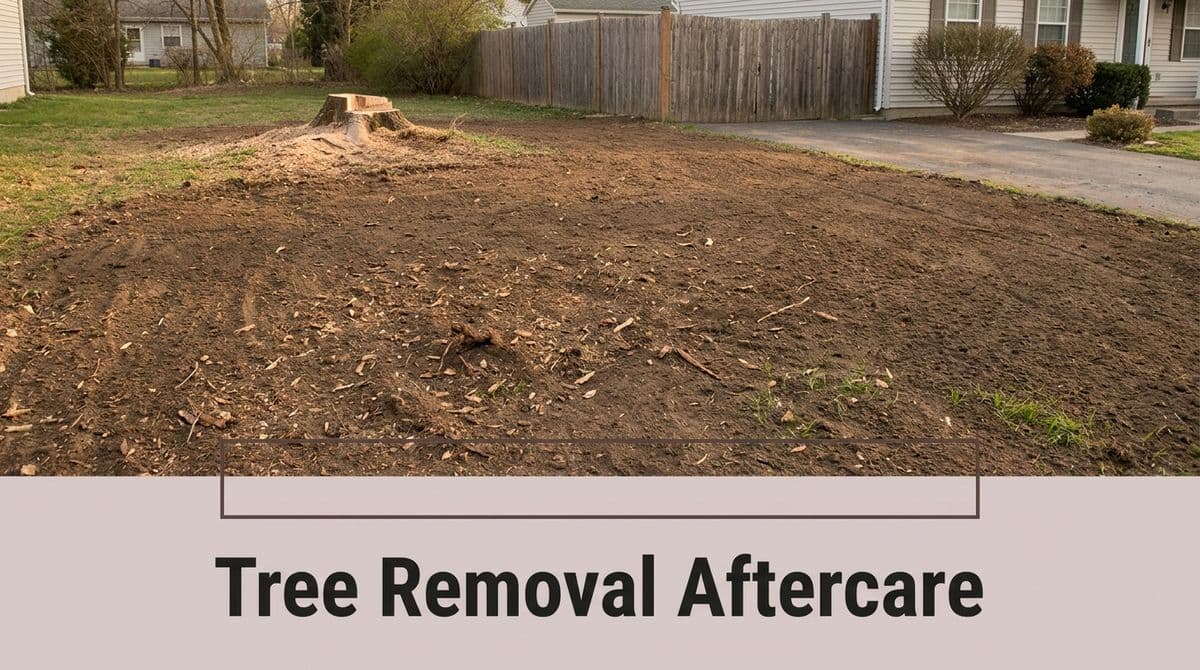
What Happens After the Tree Is Gone?
We recently got a call from a homeowner — let’s call him Mike — who had taken down two trees in his backyard the previous year. He’d already had the stumps ground out, but he was stuck with the messy part no one talks about: all the wood chips, soft sunken spots, and uneven ground where the trees used to be.
On one stump, Mike had already sifted out a lot of the dirt and chips. The other area, as he told us, “still has a decent amount of chips to it.” On top of that, his whole yard had settled and was holding water, so this summer he wanted to regrade, bring in new dirt, and even rip out his deck so everything could slope away properly from the house.
Mike’s main question for us was simple: could we come in with a skid steer, clean out the stump grinding remnants, drop the area 6–8 inches, and prep it for regrading and backfill — without him spending his weekends digging and hauling?
Why We Usually Recommend Removing Most Stump Chips
When a stump gets ground, what’s left is a mix of wood chips and soil. We see homeowners get surprised by how much volume that creates. It looks tidy at first, but over the next year or two, the chips break down and the area sinks.
Here’s what we explained to Mike about leaving chips in place:
- Settling: As those chips decompose, the ground can drop several inches, creating a low, soggy spot.
- Poor grass growth: There’s a lot of carbon in wood and not much nitrogen, so lawns struggle over heavy chip pockets.
- Drainage issues: Sunken, spongy areas can collect water right where you want a solid lawn or patio.
Because Mike was planning a full yard regrade, we recommended we remove the bulk of the chips in both stump areas first, then rebuild the grade with clean soil. That way he wouldn’t be fighting soft spots for years.
How Deep We Like to Excavate After Stump Grinding
Mike estimated both stump areas needed to come down 6–8 inches. That lined up well with what we typically do when we prep a yard for regrading or future hardscapes.
Here’s the depth strategy we walked him through:
- 6–8 inches of removal: We usually dig out at least the full depth of the grindings and any loose root pockets in that zone.
- Check for large roots: If we see big lateral roots close to the surface, we shave those down so they don’t interfere with regrading.
- Compact what’s left: Once the loose, organic material is gone, we compact the subgrade so the new fill has something solid to sit on.
We told Mike we’d confirm the exact depth on site — sometimes we can go a little shallower if the grinding was light and the area will only see lawn, and other times we’ll go deeper if there’s going to be a patio or driveway.
What We Do With All Those Chips and Spoils
Mike admitted he had access to an older skid steer but “didn’t feel like dealing with getting rid of the chips.” We hear that a lot. The digging is one thing; disposal is another.
When we handle this kind of job, we usually suggest one of these approaches:
- Haul them off site: For most full-yard regrades like Mike’s, we load chips and mixed spoils into a truck or dumpster and dispose of them properly. It costs a bit more, but you’re not stuck with random piles.
- Reuse clean chips: If there are cleaner, mostly-wood chips and you want a rustic mulch for a back corner or trail, we can stockpile them in a designated spot.
- Minimize mixing: We work to keep topsoil, subsoil, and chips as separate as practical so you’re not paying to haul away good dirt.
For Mike, hauling was the best fit: he wanted a fresh start and knew he’d be bringing in a “pretty good amount of backfill” anyway.
Regrading the Yard: How We Tie It All Together
Once stump areas are cleaned out, we shift our focus to the bigger picture: how the whole yard drains. With Mike, we talked through his plan to remove the deck and regrade from the house out across the yard.
Our typical regrading process looks like this:
- Set the target slope: We aim for at least 1 inch of fall per 4 feet away from the house in most lawn areas, more if there have been water issues.
- Import fill as needed: We bring in clean fill to build up low spots, then cap it with a few inches of quality topsoil where lawn or planting beds will go.
- Blend old and new grades: We feather edges into existing yard elevations so you don’t end up with ridges or trip hazards.
- Prep for the next step: We leave the surface ready for seed, sod, or future hardscape work, depending on your plans.
Because Mike didn’t have a hard budget yet, we talked through a basic grading plan within his $1,000–$1,500 target and then outlined optional upgrades if he decided to expand the project later.
DIY vs. Hiring Us: What We See Homeowners Run Into
We always tell homeowners the same thing we told Mike: if you’ve got equipment, time, and a place to put the chips, you can absolutely tackle some of this yourself. But we see a few common stumbling blocks:
- Underestimating volume: A small stump can produce a huge mound of grindings once you start digging.
- Soft rebuilt areas: Without compacting the subgrade and fill in lifts, those areas often settle again.
- Drainage miscalculations: It doesn’t take much to accidentally tilt water toward the house instead of away from it.
That’s where we come in. We bring the skid steer, compactors, and trucks, but we also bring the grading experience so you end up with a solid, long-term fix — not just a quick cosmetic cover-up.
Planning Your Own Tree Removal Aftercare
If you’re staring at old stump grinding piles or a lumpy yard like Mike’s, we can walk you through the same process: figure out how many chips to remove, how deep to excavate, and how to rebuild the grade so your lawn and drainage work the way they should.
Whether you just want the chip mounds gone or you’re ready for a full-yard regrade, we’re happy to take a look, talk budget openly, and design a plan that fits both your property and your wallet.