Grading, Drainage Fix, and Parking Extension Done Right
Bad drainage has a way of sneaking up on you. What starts as a soggy corner of the yard or a low spot near the driveway turns into standing water, rutted ground, and a surface that holds up worse every season. That's exactly the kind of problem we stepped in to solve here.
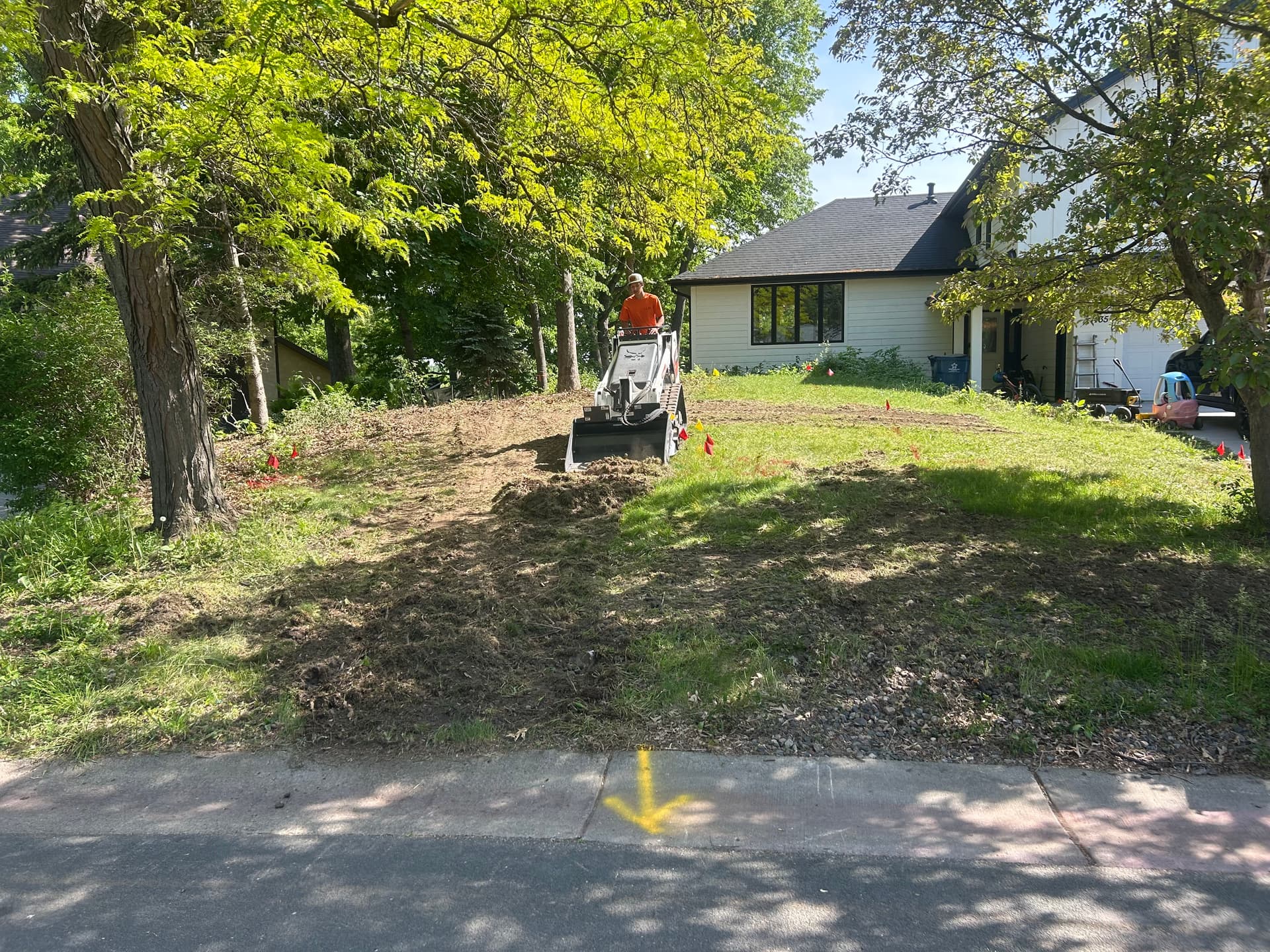
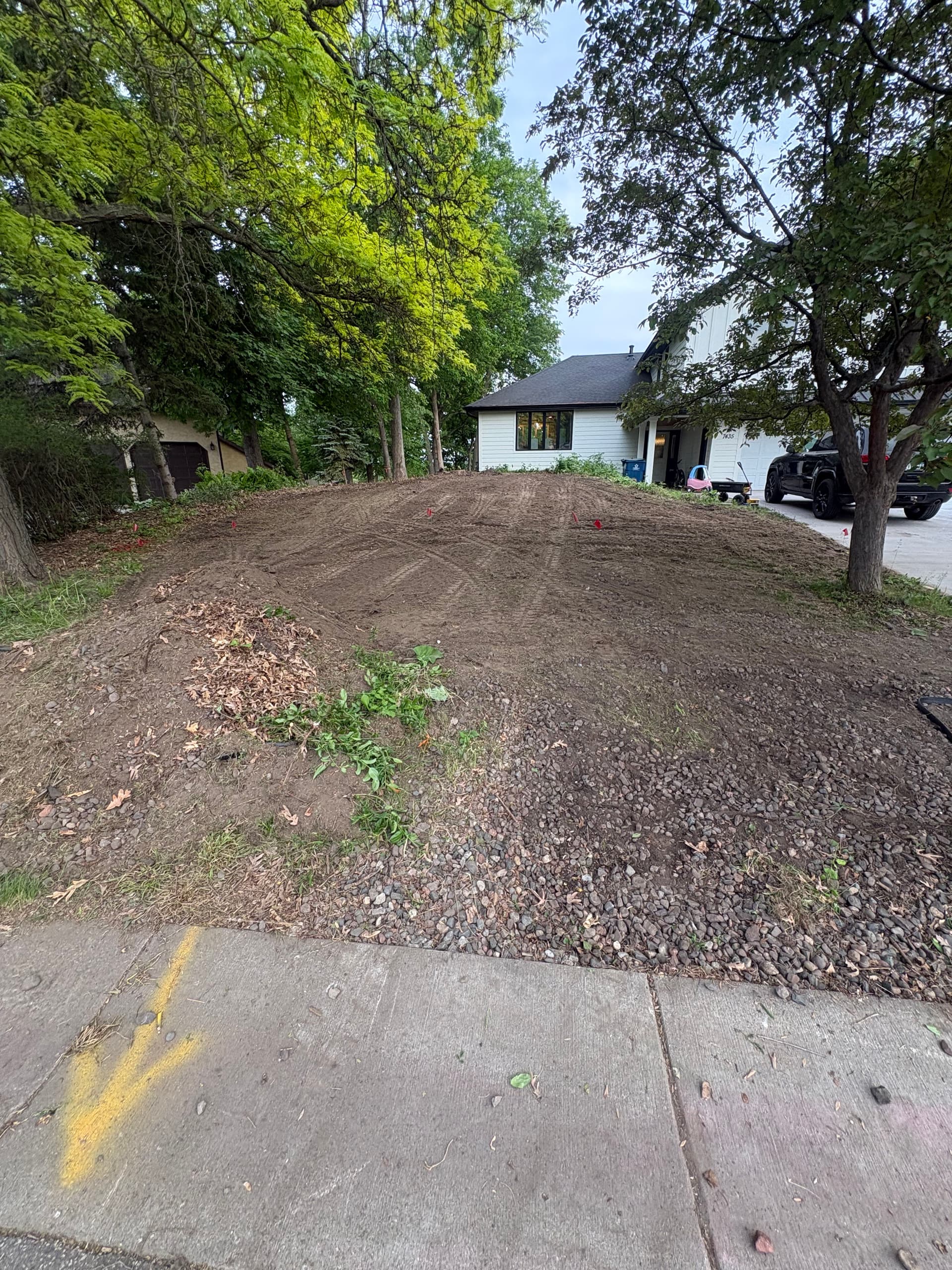
We started by getting the grade right. Using a skid steer, we worked the ground down to a proper slope - moving material, smoothing out the high and low spots, and making sure water would have a clear path to move away from the area instead of pooling. The utility flags you can see staked out across the yard weren't just for looks - they helped us stay precise and protect anything underground while we worked.
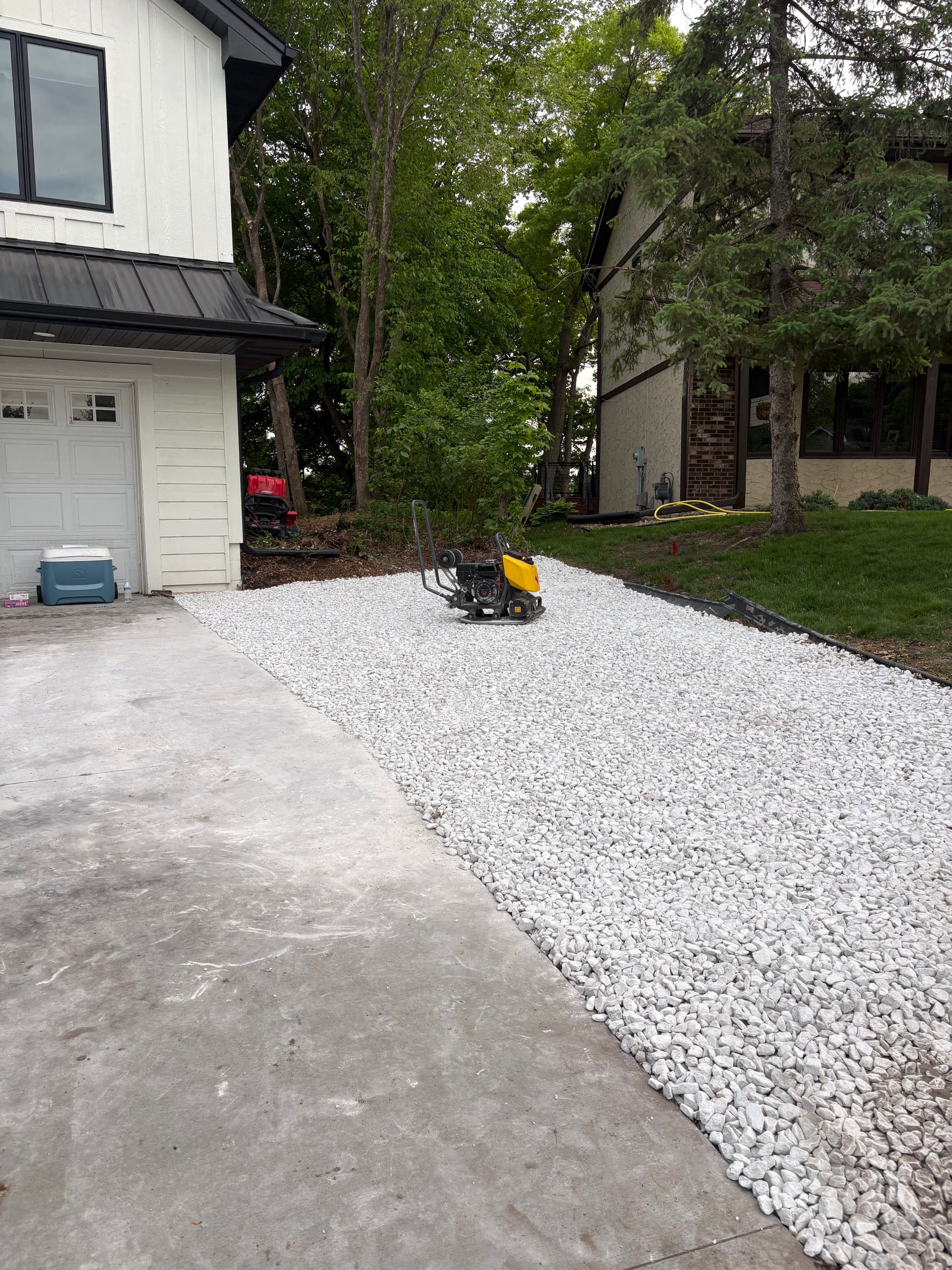
Once the grading was dialed in, we extended the parking area and compacted everything down solid. Compaction is one of those steps that's easy to skip but impossible to fake. If you don't pack the base properly, the surface shifts, sinks, and breaks down fast - especially in freeze-thaw climates. We used a plate compactor to lock in a stable base before laying the white gravel on top.
The finished parking extension came out clean and functional. A layer of bright white gravel spread evenly, bordered by clean edging, sitting on a compacted base that's built to last. That's the kind of groundwork that holds up - not just for a season, but for years.
Whether it's a yard that won't drain, a driveway that's outgrown its space, or a surface that keeps breaking down - proper grading and leveling is where it all starts. Get the ground right first, and everything on top of it has a real shot at lasting.